
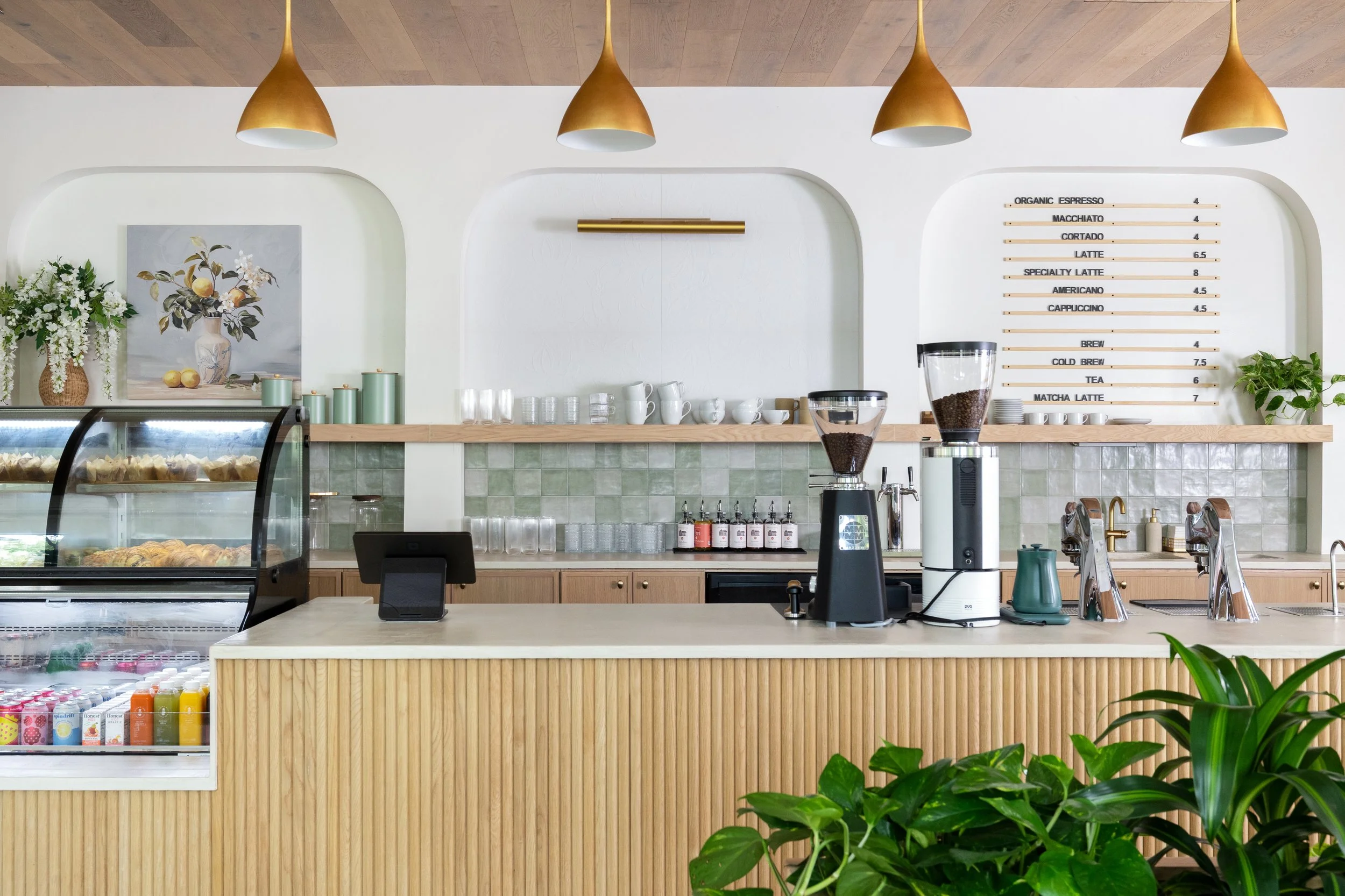
BLOOM & BEAN
WHERE COFFEE AND FLOWERS MEET
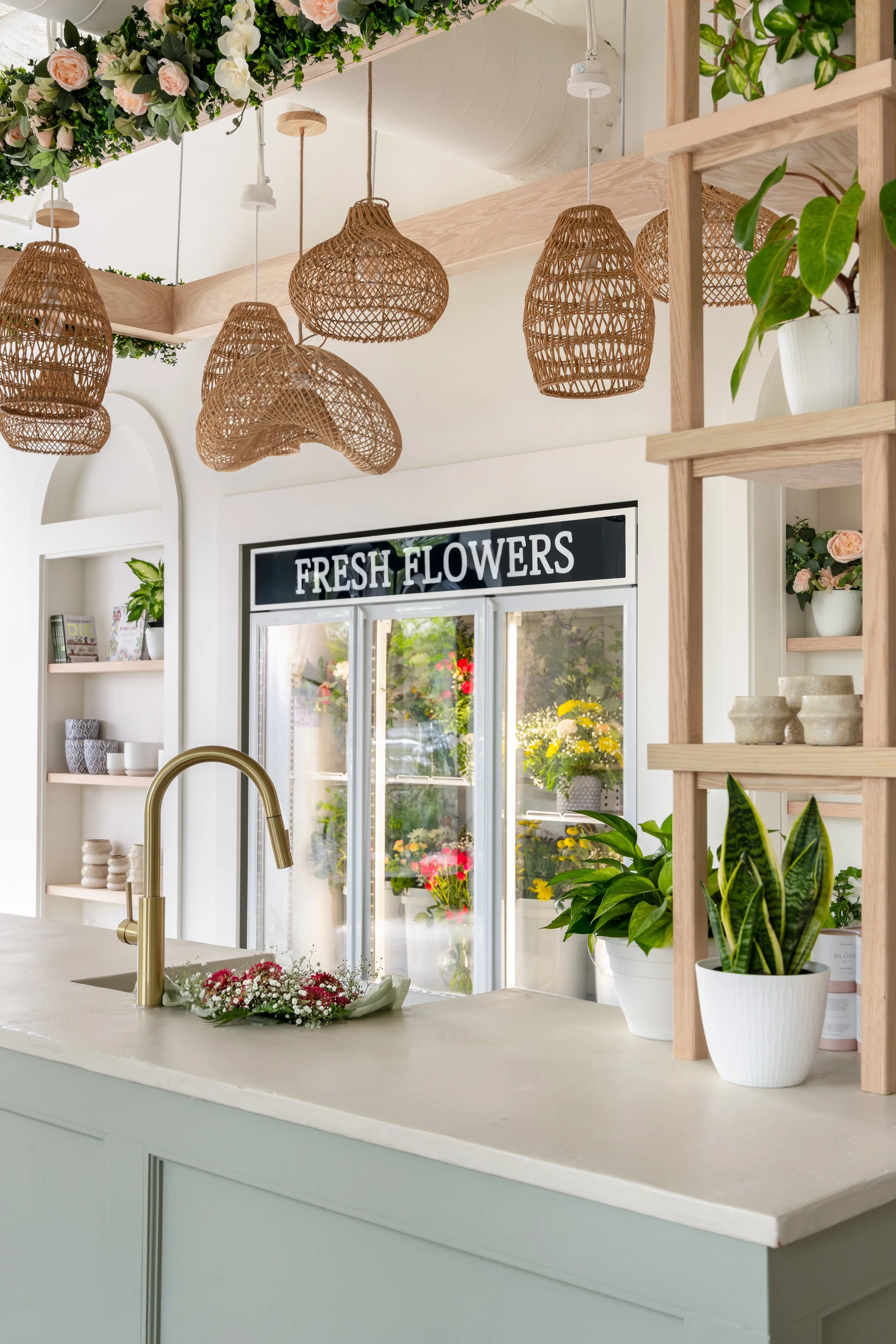
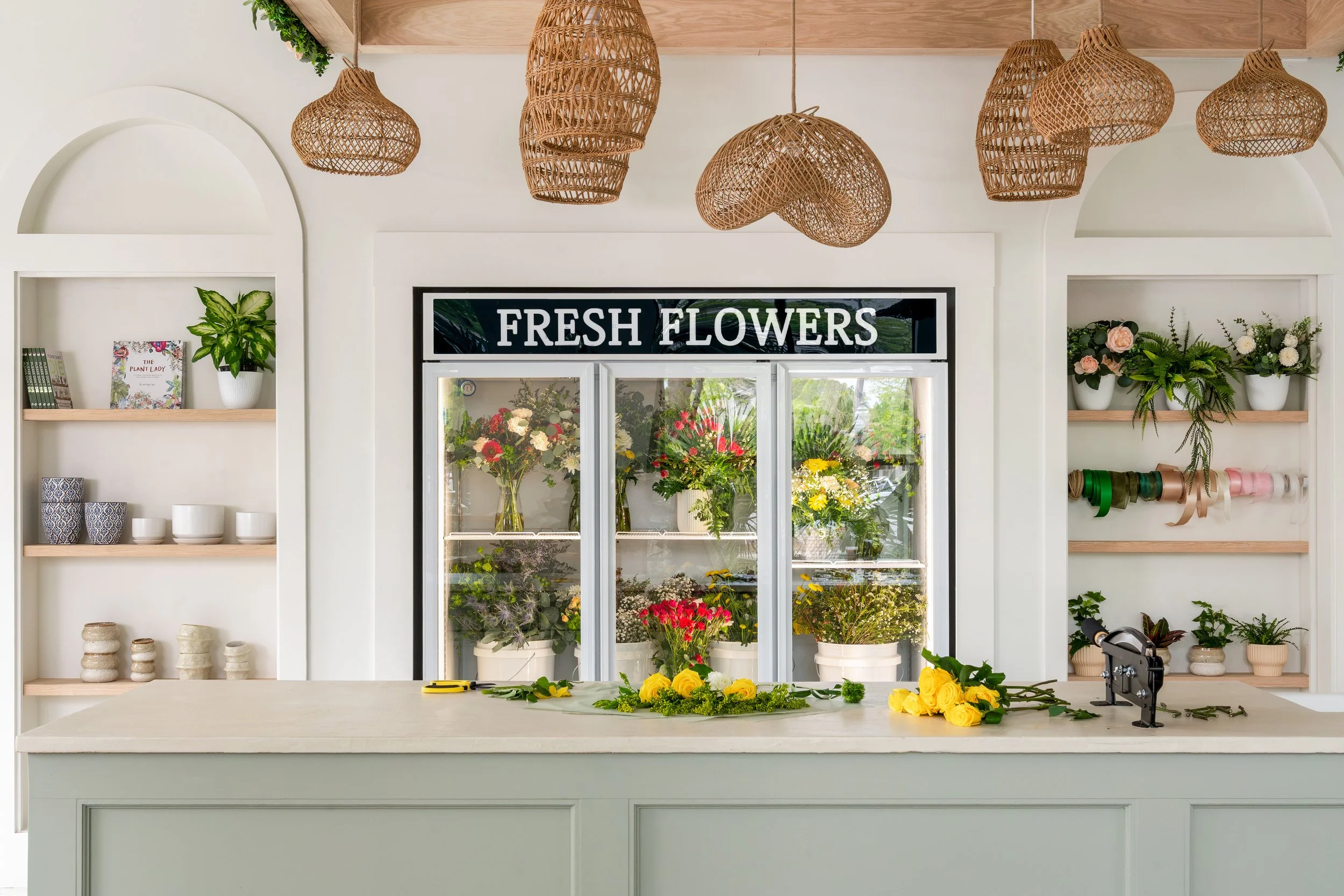
When the owners of Bloom & Bean first reached out, the concept was ambitious from the start: a place where coffee and flowers come together, under one roof. A place where people would come and linger. But the design challenge was anything but. How do you hold two entirely different sensory worlds — the quiet ritual of grabbing yourself a coffee and the abundance of a working flower shop, in one space without it feeling divided, cluttered, or confused?
My answer was to stop thinking about it as two things and start designing it as one. Not two businesses sharing a room. One experience, fully considered.
THE DESIGN DIRECTION
The approach was Mediterranean at its core, a design language I'm drawn to for its warmth, its sense of permanence, and the way it makes spaces feel like they've always existed. There's an unhurried quality to Mediterranean interiors that I knew would serve this project perfectly. This wasn't meant to be a place people rushed through. It was meant to be a place they stayed.
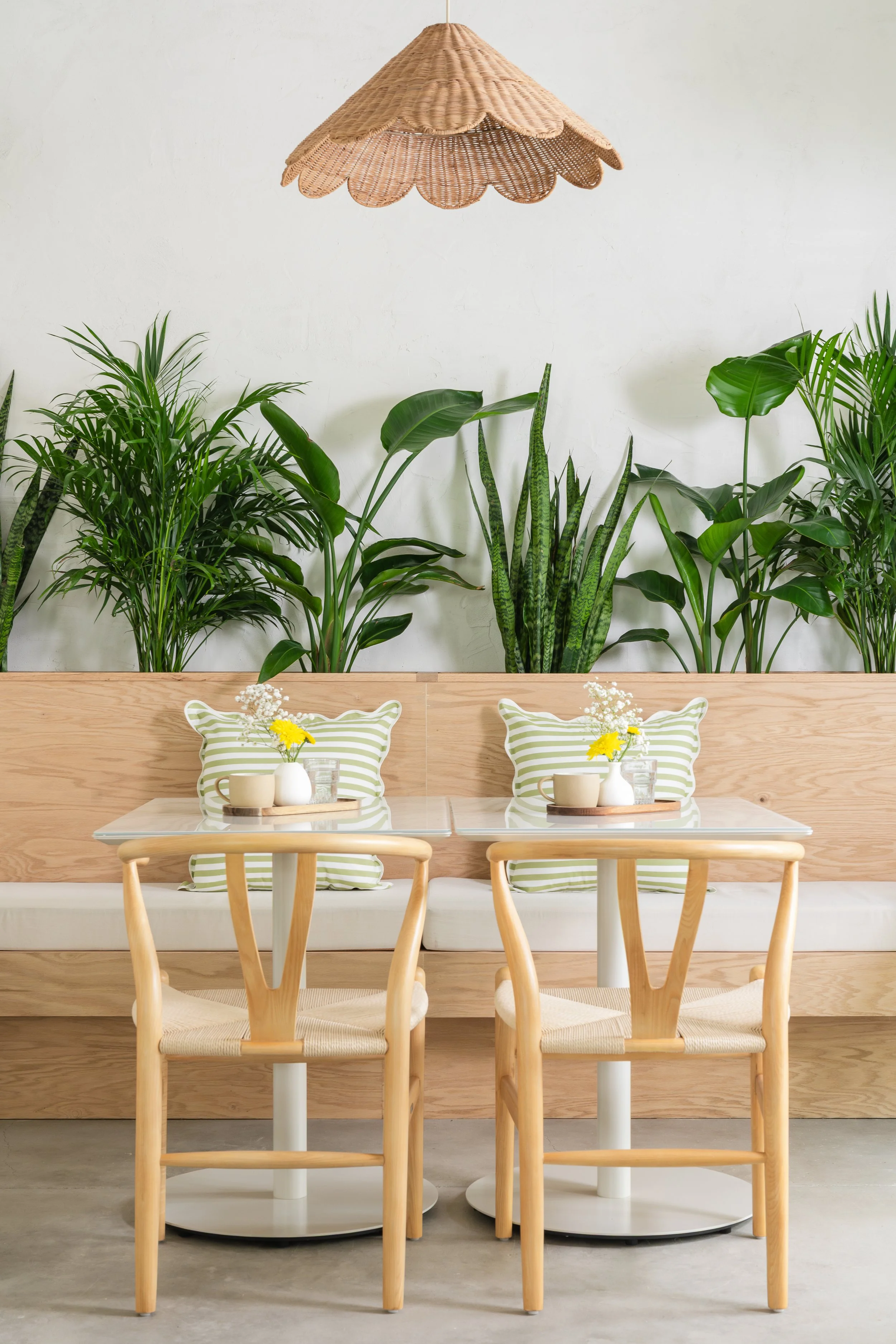
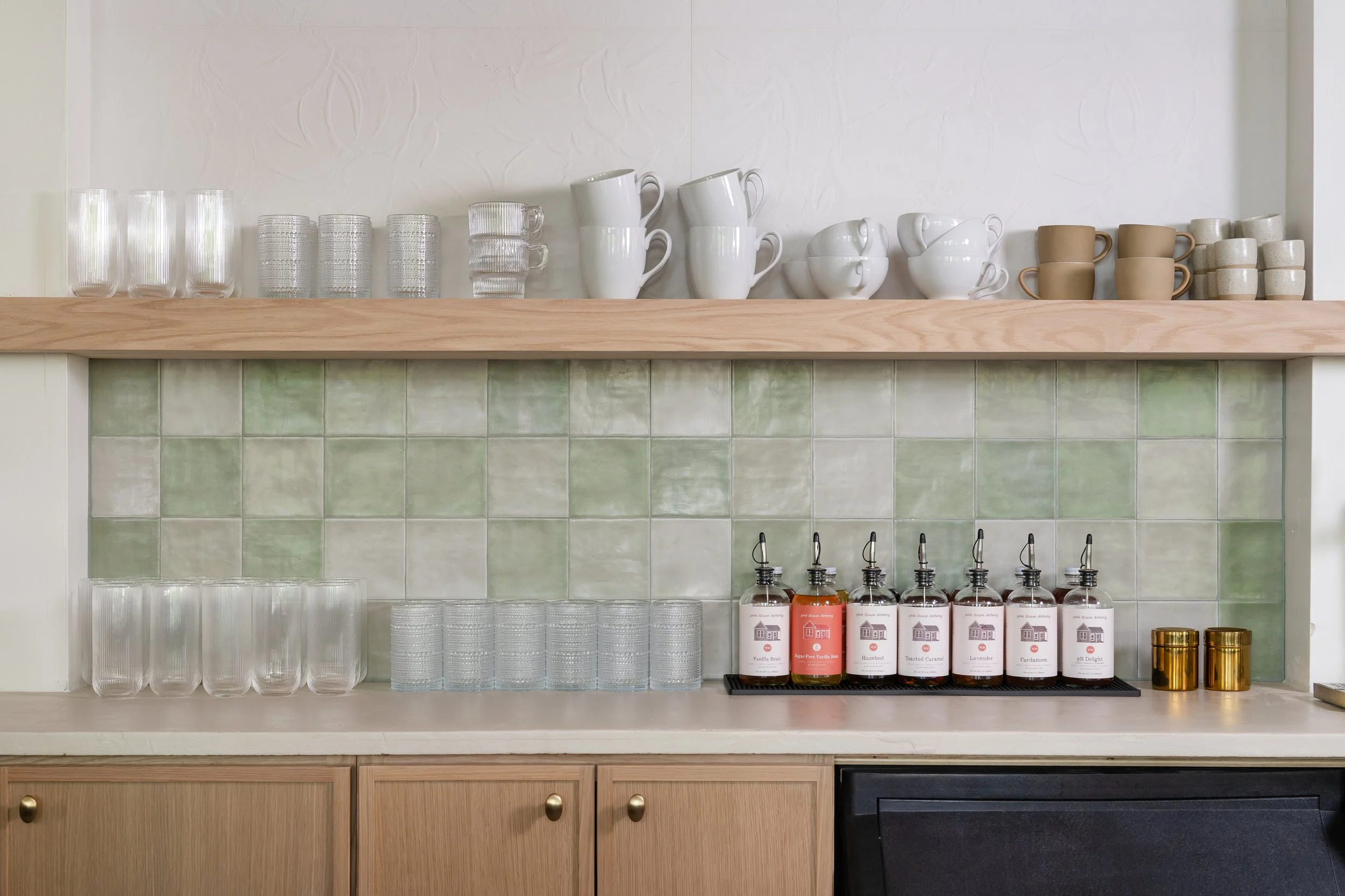
From there, every decision was made in service of that atmosphere. The palette — warm white, natural oak, muted sage — was kept deliberately restrained. When your product is flowers, you don't compete with them. You let them be the color.
“The palette stays deliberately restrained so the florals and the light do the work. You walk in and you just breathe.”


THE MATERIAL STORY
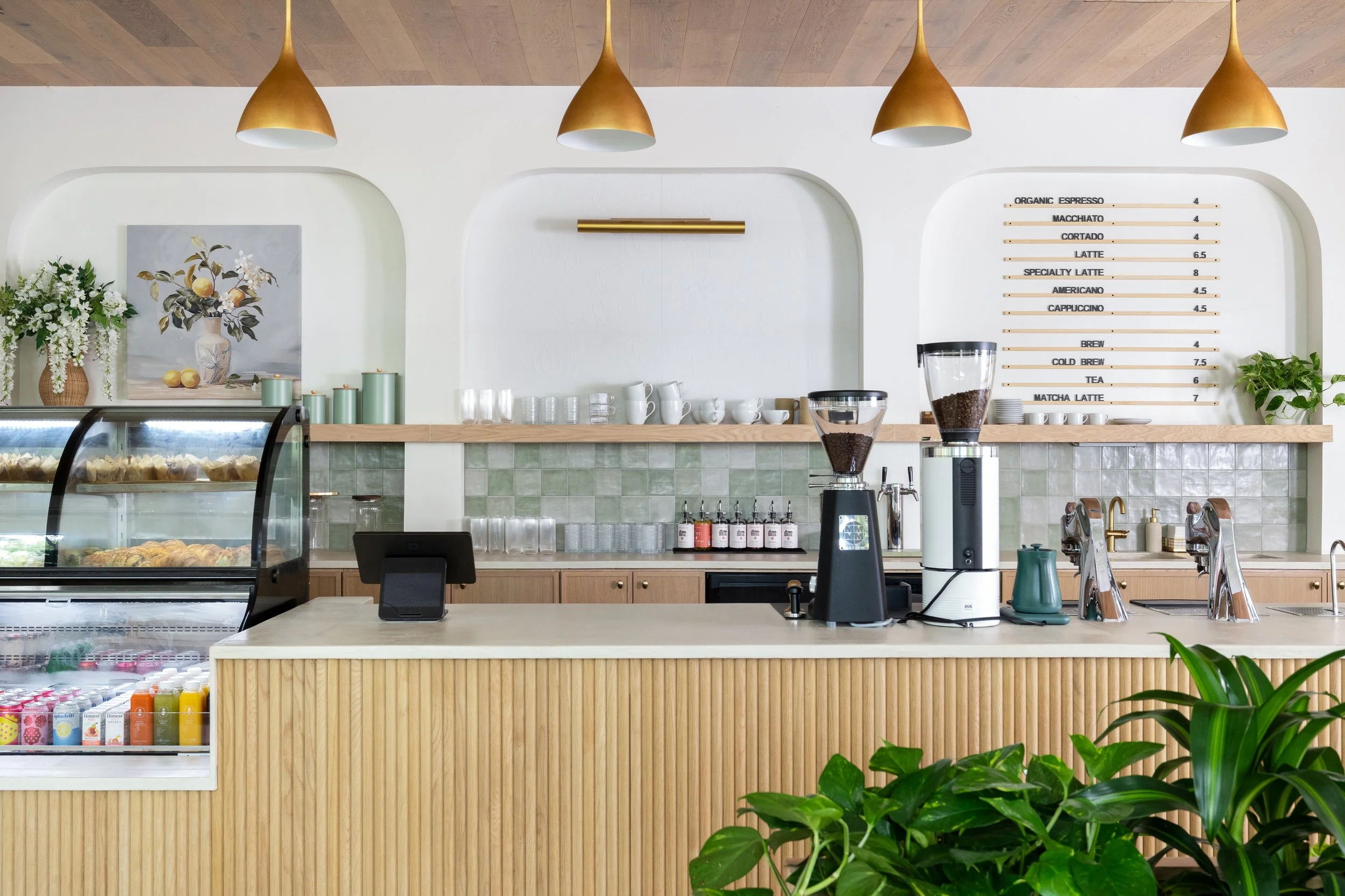
What makes Bloom & Bean distinct isn't any single element — it's the architectural language running through the entire space. Every detail was chosen to feel considered rather than decorated.
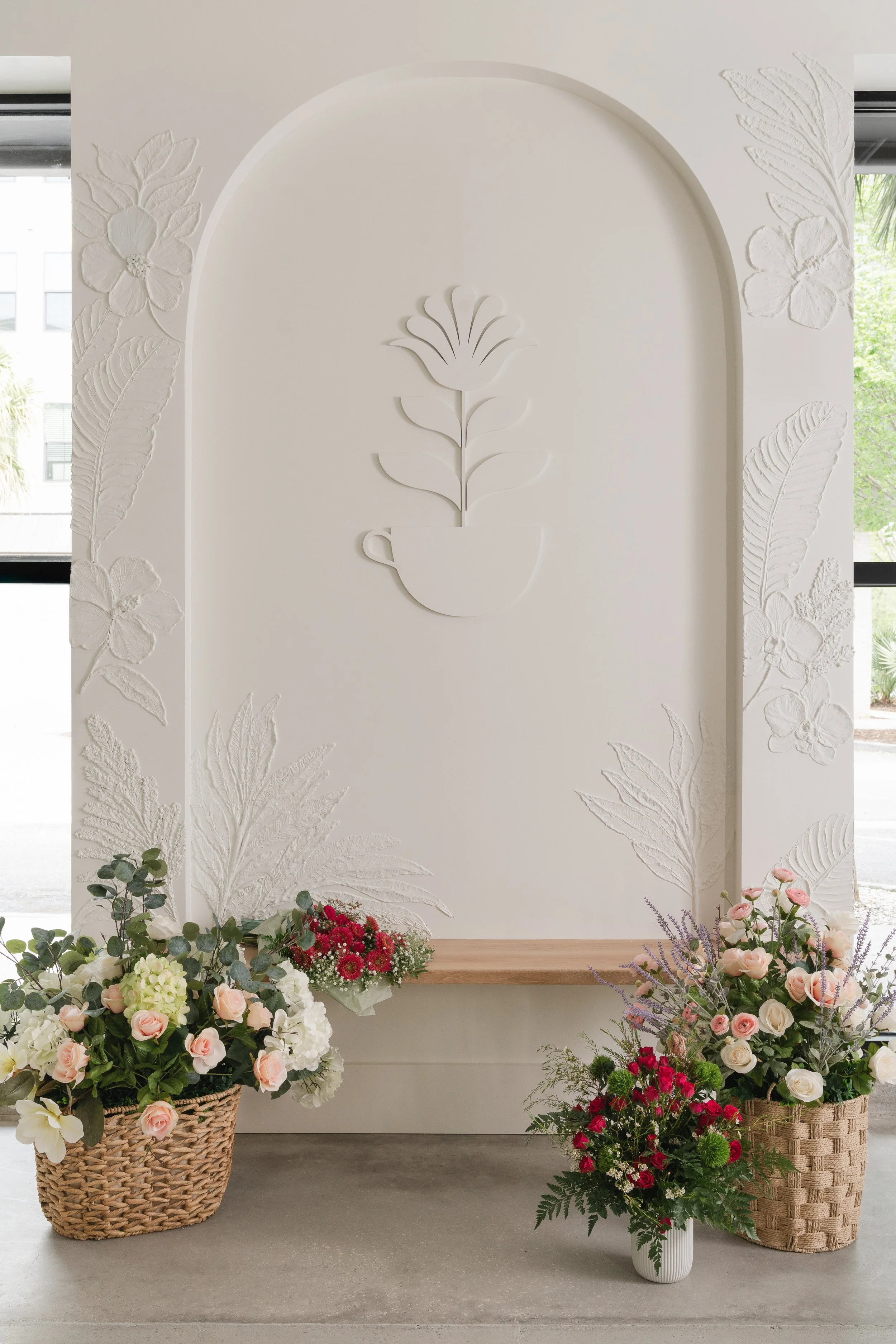
Hand-applied plaster walls
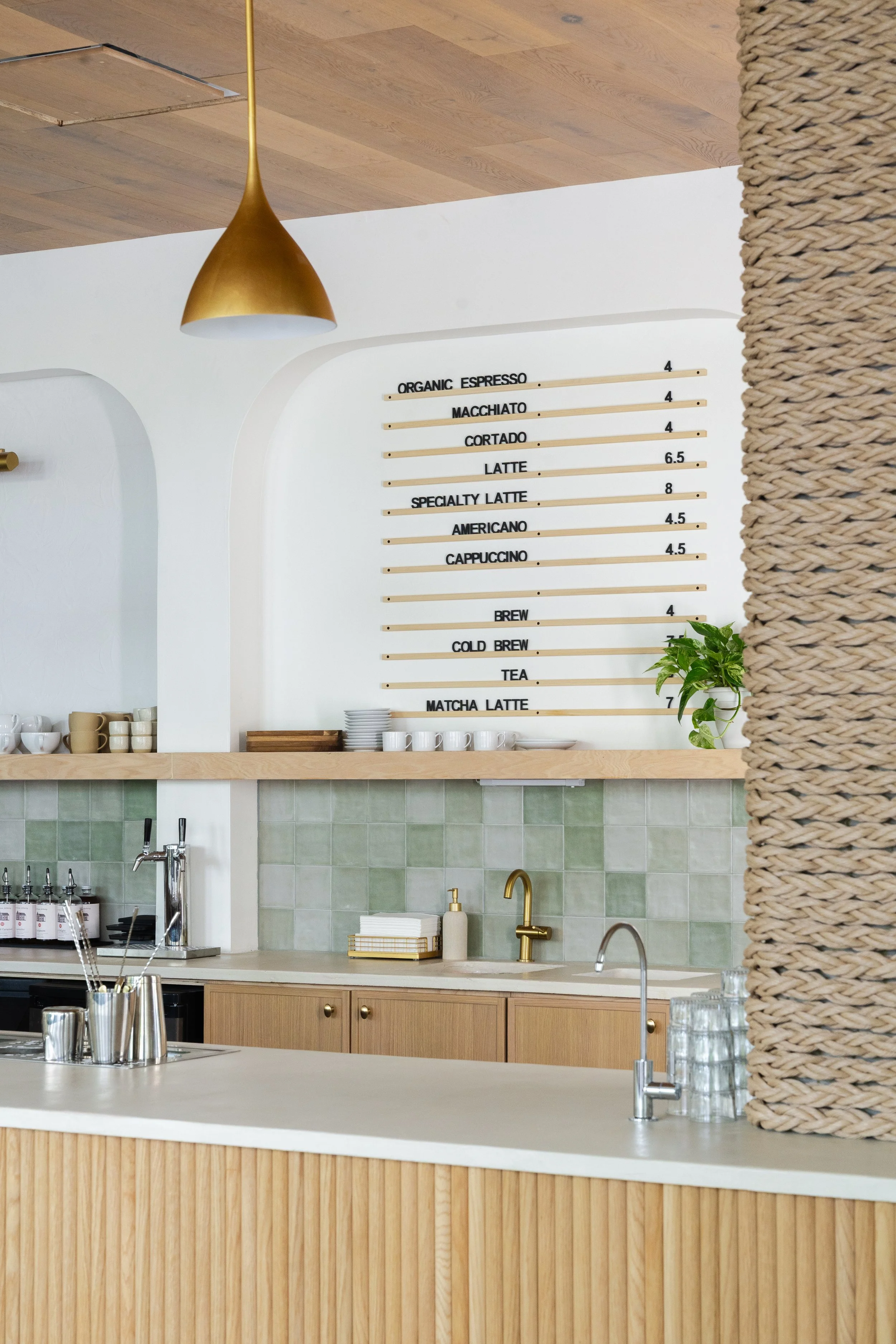
Arched niches throughout
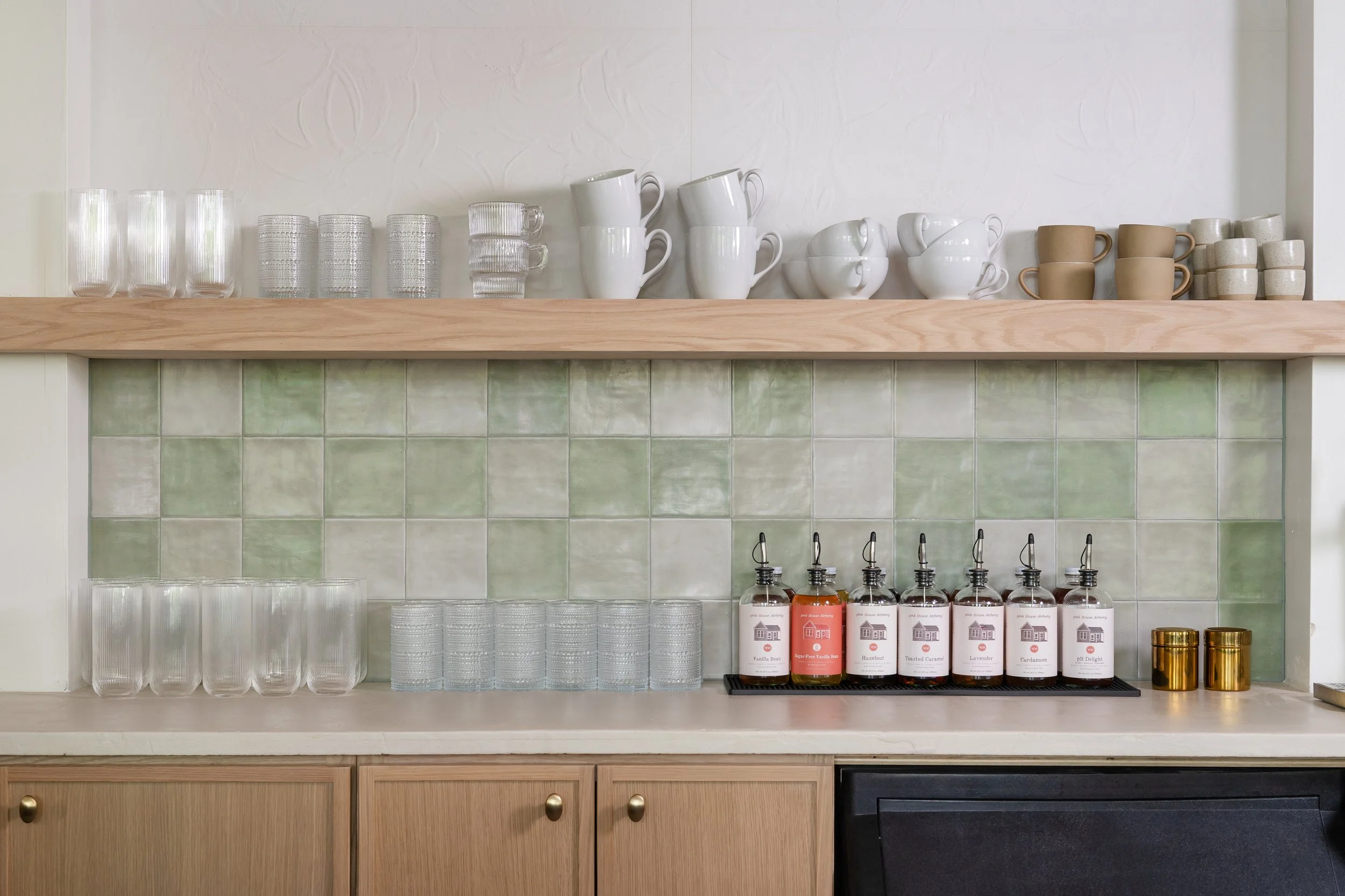
Zellige-inspired sage green tile
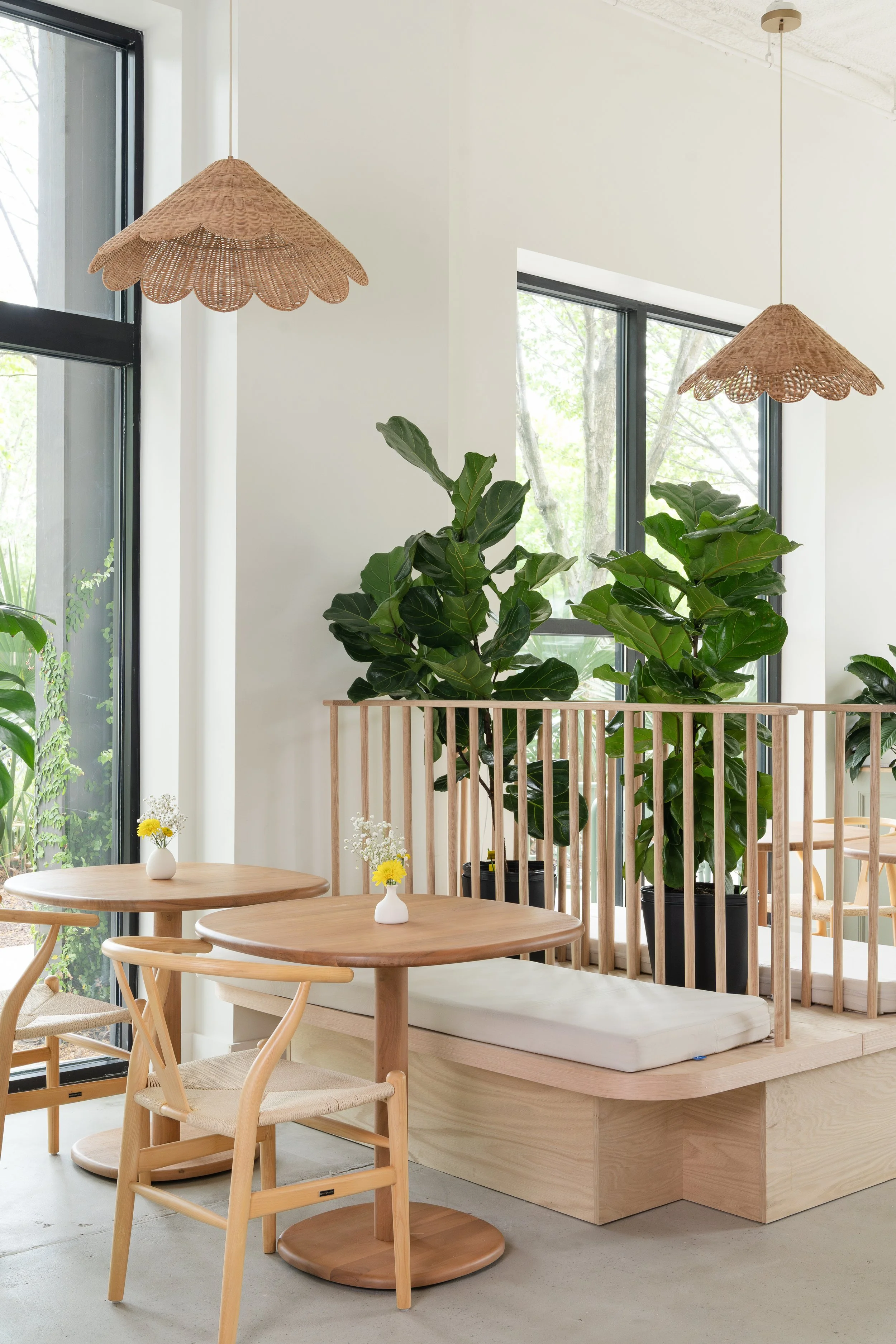
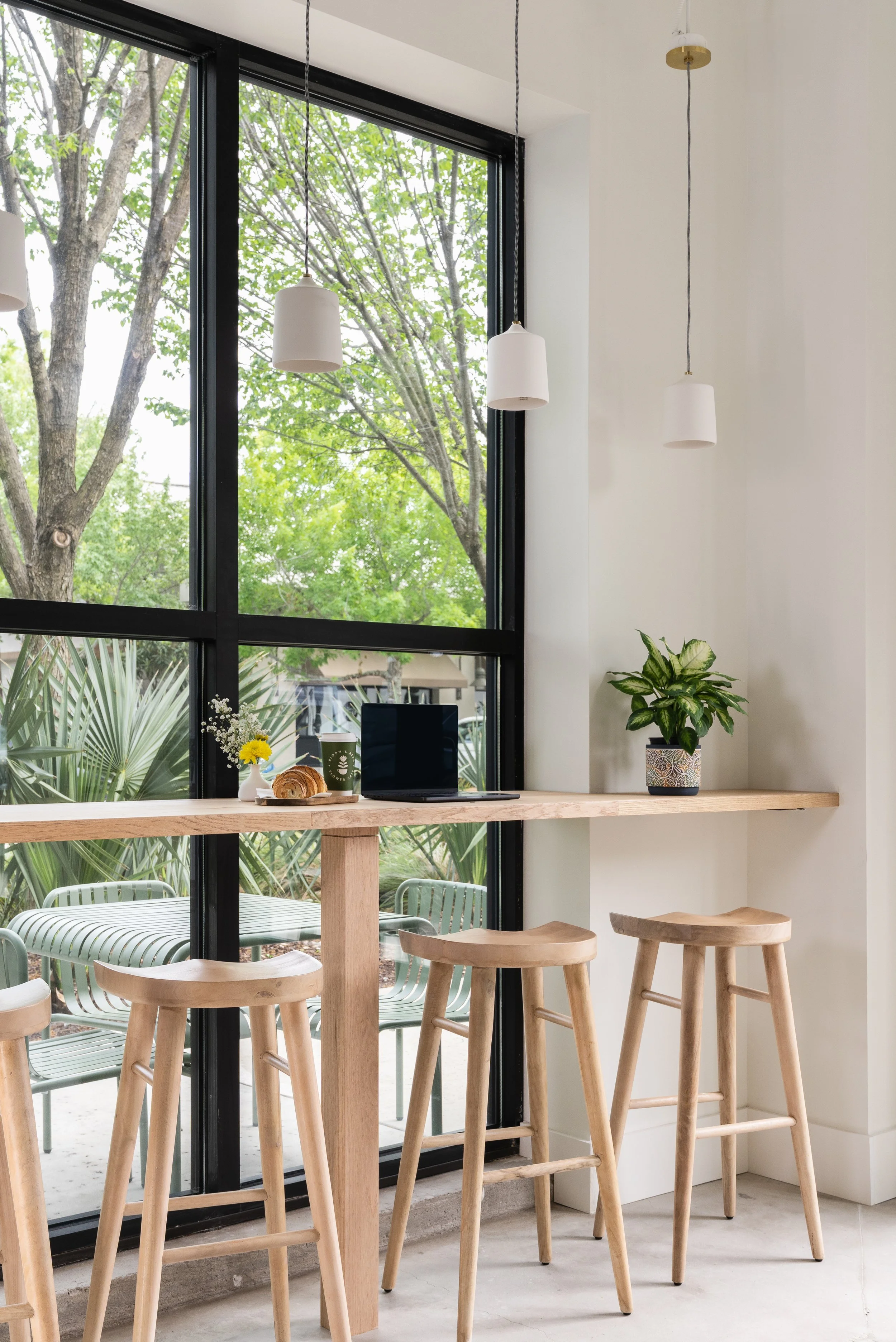
White oak carpentry
Aged brass accents
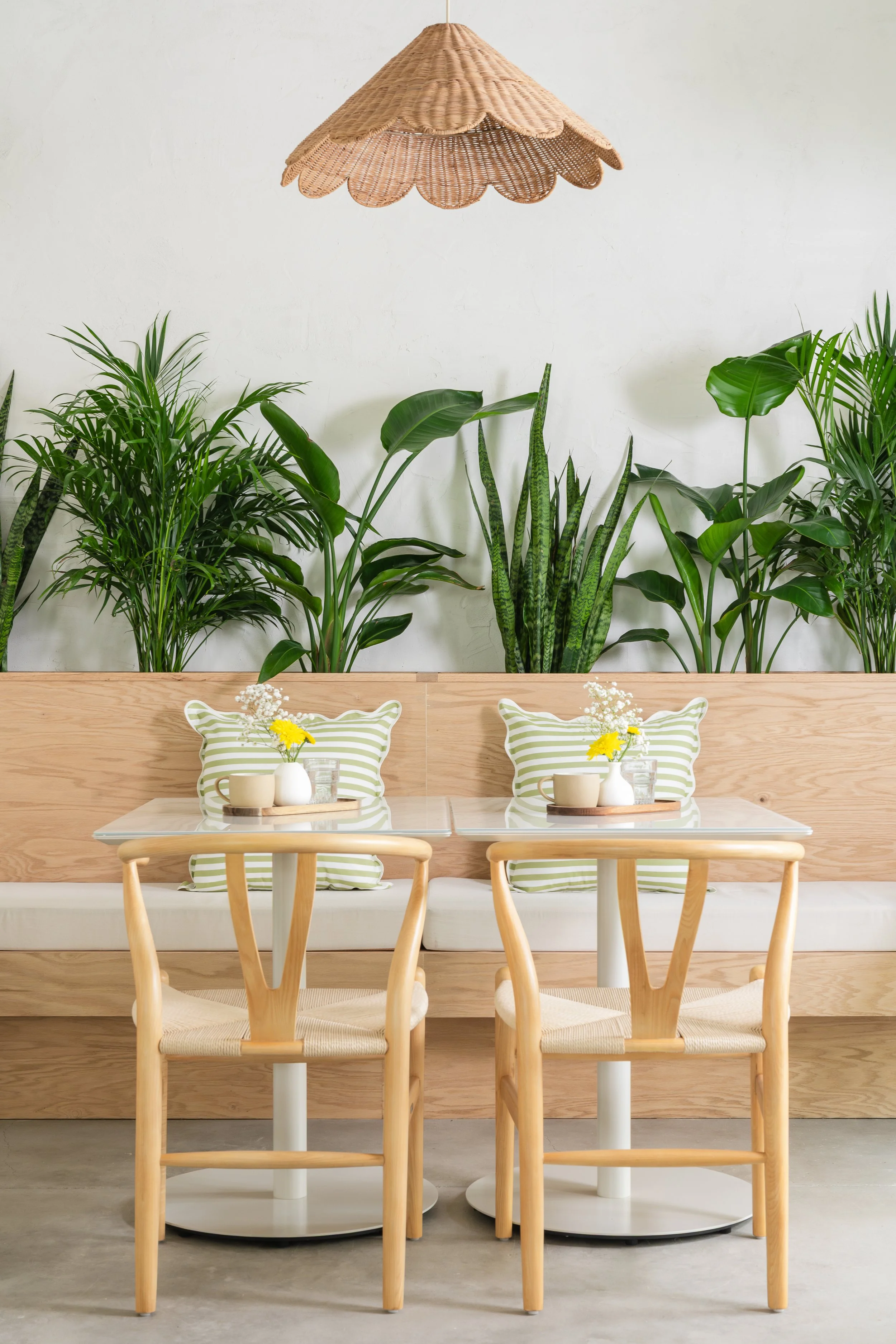
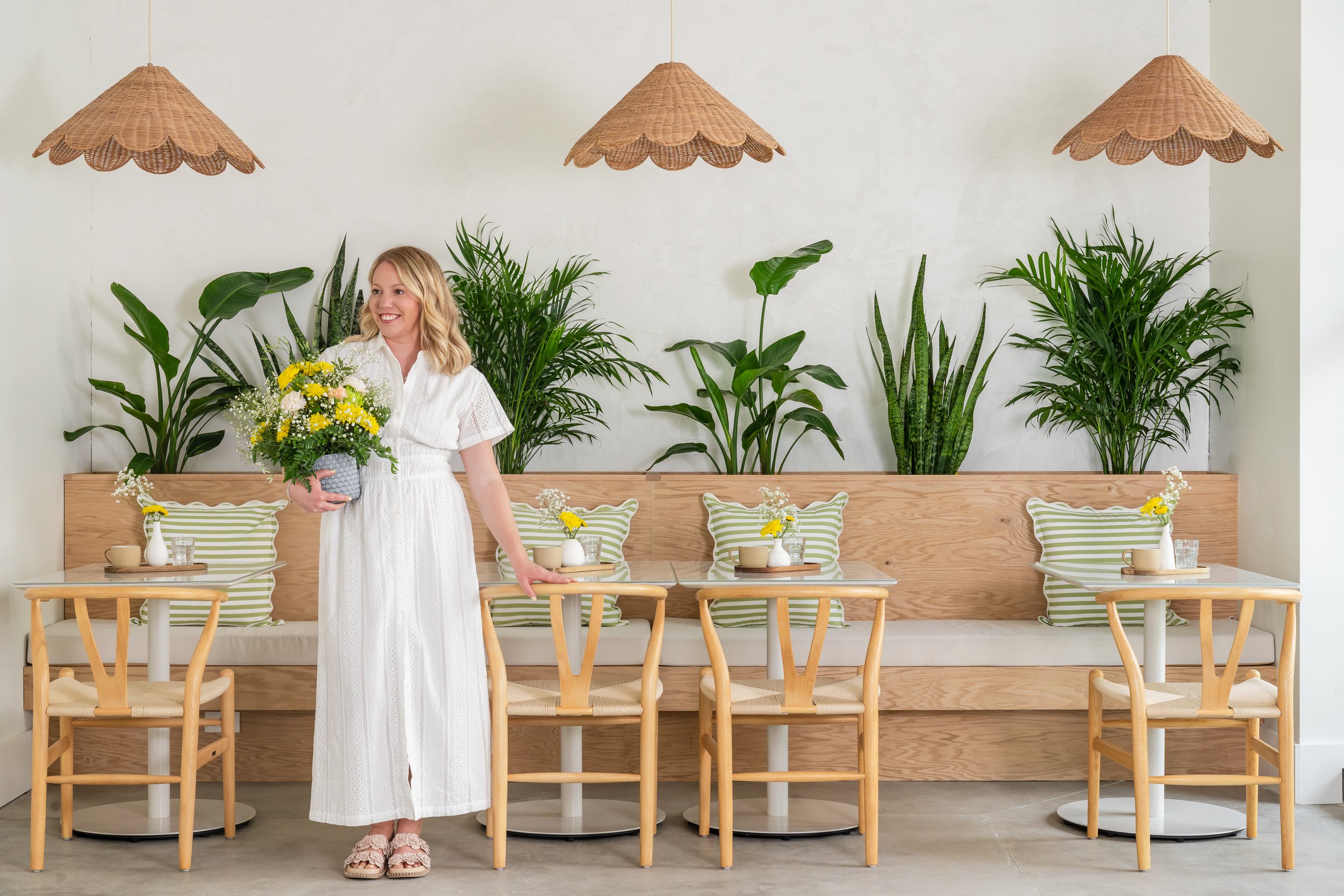
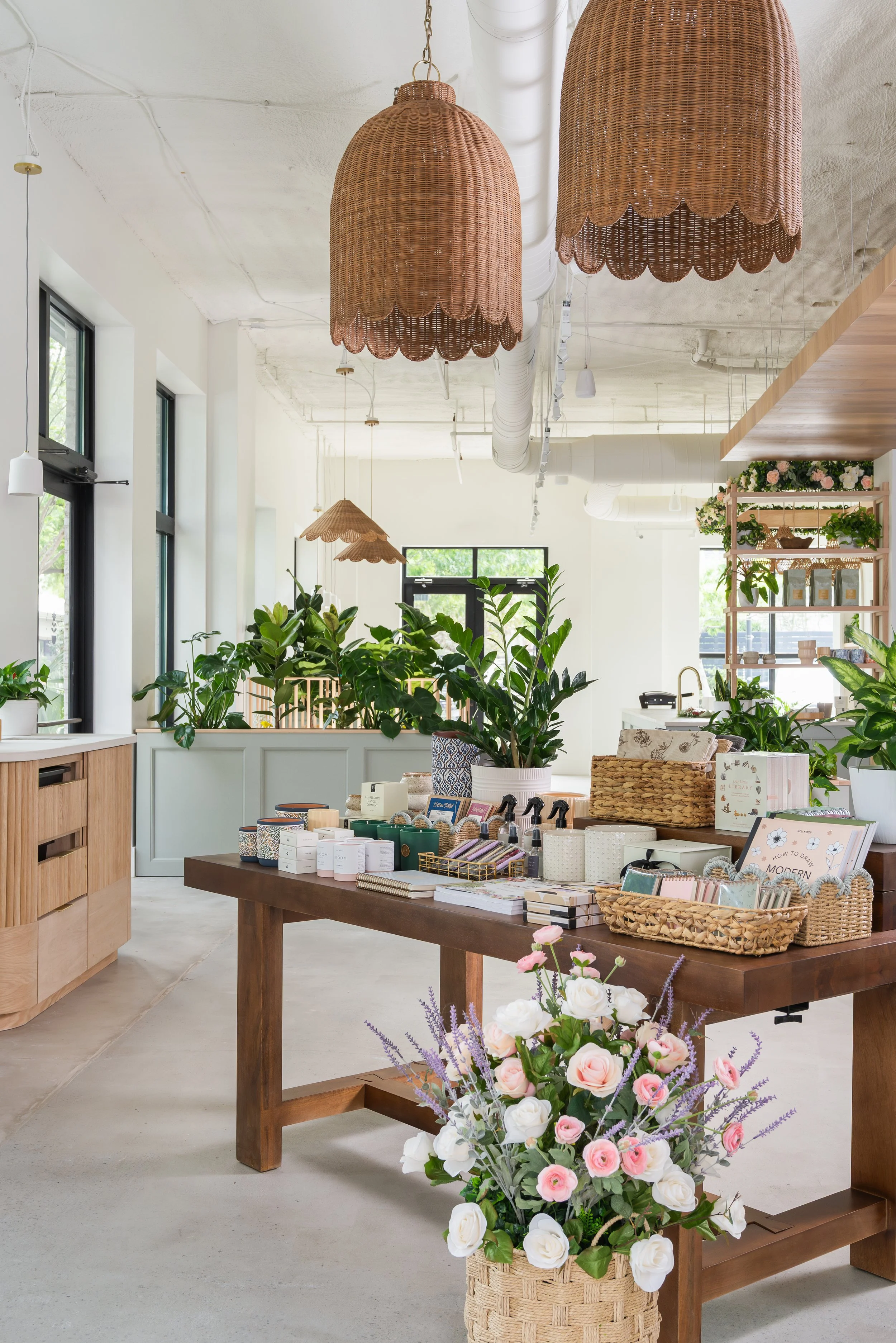
Scalloped rattan pendants
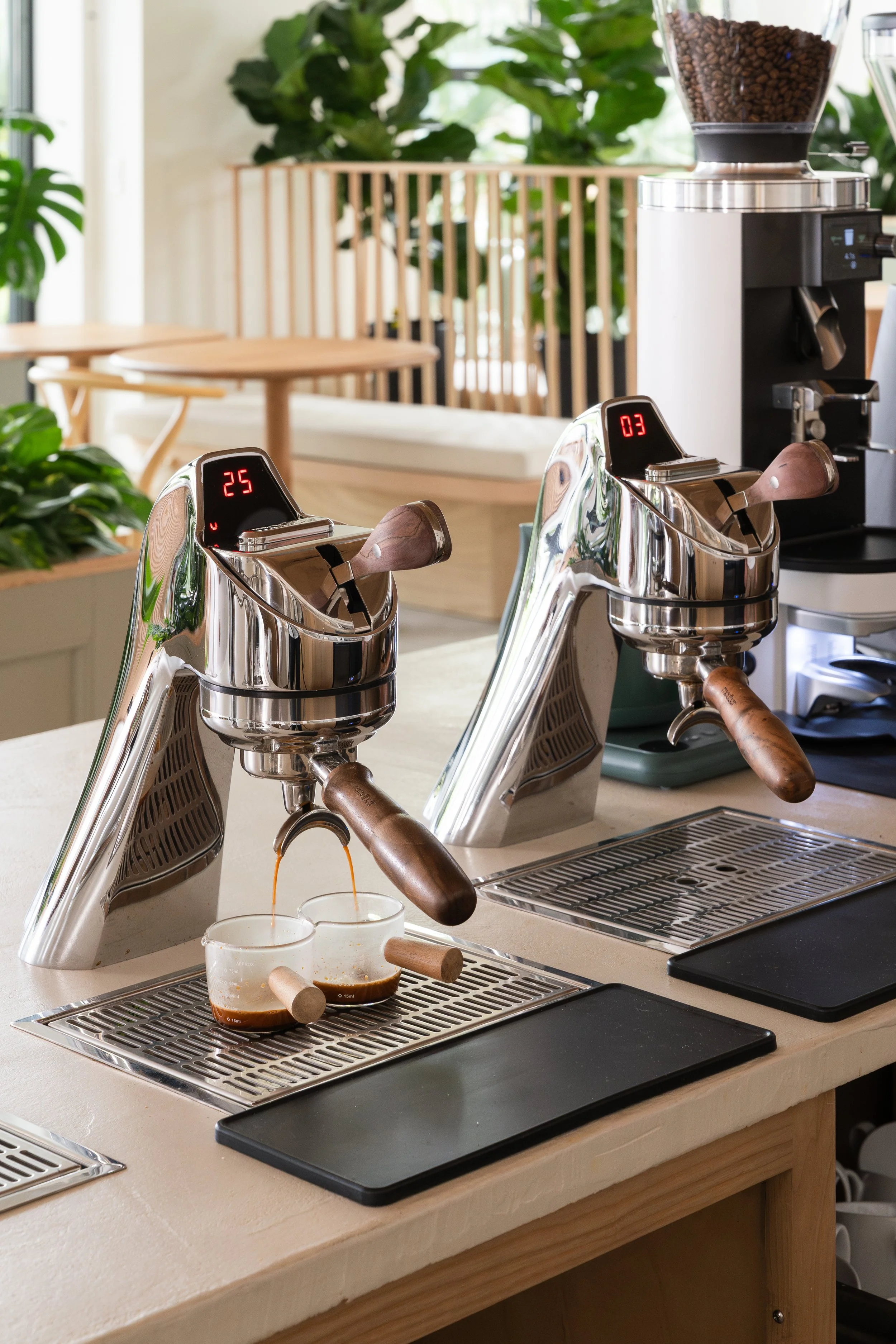
Micro-cement countertop
The scalloped rattan pendants were particularly important to me — they appear in multiple zones and become the thread that ties the whole space together. In design, repetition creates rhythm. Rhythm creates cohesion. And cohesion is what makes a space feel intentional rather than assembled.
The Living Layer
No amount of plaster or tile creates atmosphere the way a room full of living things does. This part of the vision was Karolina's, the owner — and it was one of the best briefs I've ever received. From the beginning, she knew she wanted the space to feel alive in the most literal sense, and I designed around that intention with biophilic principles at the core.
The plants aren't styling. They're structure. Greenery softens shelves and sightlines throughout. Paired with the fresh florals from the shop itself, the result is a space that changes daily — never quite the same twice, always breathing.
It's the layer that makes everything else feel less like a designed space and more like somewhere that simply grew. Karolina saw that before I put pen to paper, and it made the whole project richer for it.
Bloom & Bean is already becoming a neighborhood staple in Mount Pleasant — and honestly, that's the highest compliment a space can receive. Not that it photographed beautifully (though it did), but that people keep coming back. That they linger. That it feels like theirs.
That's what good design does. It doesn't announce itself. It just makes you feel at home.
Commercial Design | Mediterranean Interiors | Charleston SC | Quiet Luxury | Café Design | Flower Shop Design | Studio Miles
Photography by @goldenphotochs